Russia's full-scale invasion of Ukraine has accelerated the Kremlin's ultra-conservative trajectory, yet traditionalist circles within the Russian elite continue to criticize the authorities and press for a more radical course. Escalation, including the use of nuclear weapons, is the centerpiece of the positive scenario presented in the Dugin-Malofeev strategic report at SPIEF.
The remaining scenarios, including one in which the Kremlin’s current policy is simply continued, project defeat in the war and the loss of sovereignty. Yet the ultra-conservatives' disconnection from reality and their ostentatious ideological posturing have left them without support even from the Z-Community, which either ignores traditionalist projects altogether or actively criticizes them.
Key topics: 1. The SPIEF 2026 report: principal threats to Russia and the prospects for the war 2. The baseline, the bad, and the good scenarios: 2036 and 2050 3. Z-bloggers: "The fat cats already have a plan!"
Executive Summary
Russia’s full-scale invasion of Ukraine has accelerated the Kremlin’s ultra-conservative trajectory, yet traditionalist circles within the Russian elite continue to criticize the authorities and press for a more radical course. Escalation, including the use of nuclear weapons, is the centerpiece of the positive scenario presented in the Dugin-Malofeev strategic report at SPIEF. The remaining scenarios, including one in which the Kremlin’s current policy is simply continued, project defeat in the war and the loss of sovereignty. Yet the ultra-conservatives’ disconnection from reality and their ostentatious ideological posturing have left them without support even from the Z-Community, which either ignores traditionalist projects altogether or actively criticizes them.
The St Petersburg International Economic Forum (SPIEF), held from 3 to 6 June against the backdrop of Ukrainian drone strikes on St Petersburg, is the Kremlin’s most high-profile prestige showcase, a platform used to project a propaganda narrative of economic success, supposed recovery from international isolation, and Russia’s integration into global processes. To this end, the Kremlin actively recruits sympathetic “representatives” of the Western world: Eurosceptics, the far right, Alt-Media influencers, and Moscow-subsidized fringe figures of the second and third rank.
The gathering of Russia’s elite in St. Petersburg has in recent years been accompanied by an unwelcome organic counter-narrative: the dominant topic on social media is not the Kremlin’s triumphalist communiqués but the density of escort workers in the city during the forum dates. From the more radical segment of the Z-Community, meanwhile, a pronounced anti-elite sentiment is audible: the most widely shared post on SPIEF, with over 6,000 reposts, was a note by Z-blogger Anastasia Kashevarova, in which she accused the “top brass” of weakness, writing that “it was especially frustrating and nauseating to watch this SPIEF, which has nothing profound or serious, nothing the economy actually needs. This isn’t an economic platform, it’s a media platform, yet another global press conference of everyone about everyone, and ultimately about nothing.” (1) Her sentiment is echoed by another prominent Z-blogger, Yana Poplavskaya: “SPIEF needs a break. For a few years. <…> As if the world were in desperate need of the opinions of hungover, sweaty men in shapeless blue suits whose only thought is where to party tonight and with whom.” (2)
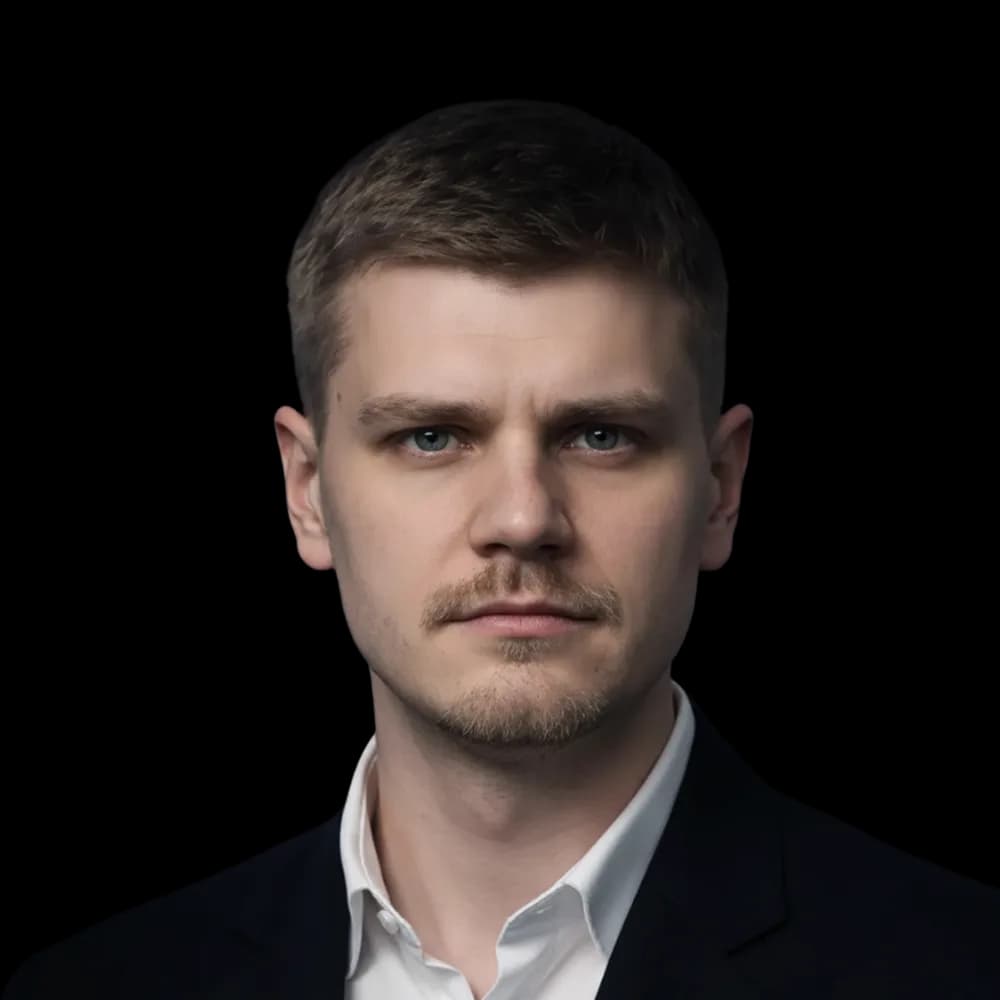
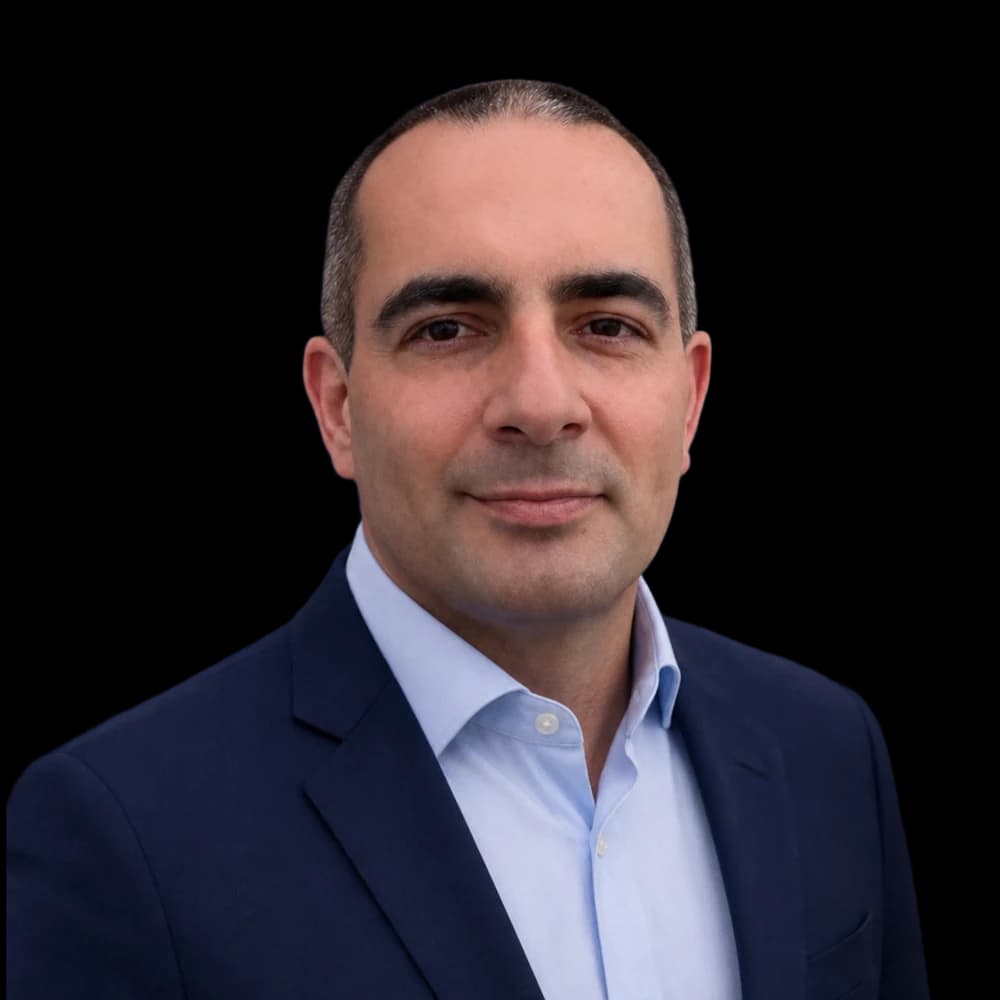
Among the forum’s numerous sessions, the panel “Principal Threats Facing Russia in the Second Quarter of the 21st Century” stood out. (3) It brought together ultra-conservative figures from the Russian elite — the Orthodox oligarch Konstantin Malofeev, the fascist-oriented traditionalist philosopher Alexander Dugin, SVR intelligence officer and close associate of Igor Sechin Andrei Bezrukov, and a number of their associates — to present a report by the fundamentalist think-tank Tsargrad Institute, part of Malofeev’s asset portfolio.
The report is, in essence, an ultra-conservative vision of the future: a current and historical assessment of threats to Russia, projected forward to 2036, which Malofeev describes as the year of the “unconditional transfer [of power],” and to 2050. Of the 15 principal current threats identified by the report’s authors, those rated as most urgent and critical include the risks of Russia’s destruction in the current war, national disintegration, and internal conspiracy, alongside technological risks: the development of “Western AI,” biological weapons and biotechnology, and Russia’s manifest technological dependence. The authors also note a marked overall increase in the severity of risks since 2014, a veiled critique of the Kremlin’s “vegetarian” policy from the right.
Three scenarios for the future are considered: the baseline — “things continue as they are”; the bad — “Russia’s enemies succeed in implementing their strategy”; and the good — “we do everything in the best possible way.” The implicit critique of the Kremlin is pointed: the baseline scenario, in which the authorities simply continue current policy, projects a protracted war in Ukraine freezing by 2036, and Russia’s decline into a second-rank power, slowly losing influence against the backdrop of American/Chinese hegemony and numerous armed conflicts. Particular emphasis is placed on “a catastrophic escalation of the threat of Russia’s destruction in the war” and territorial losses to China — the Arctic Ocean and Lake Baikal. Alexander Dugin himself declares bluntly: “A scenario in which we continue doing what we are doing now, or a scenario in which our enemies succeed — it is one and the same: we are finished.”
Going further, the bad scenario projects that by 2036 Russia will face “defeat in Ukraine and in its confrontation with the West,” loss of influence across the entire post-Soviet space, and a growing threat to its territorial integrity, leading by 2050 to the complete destruction of sovereignty and Russia’s colonization within a unipolar post-globalist world anchored by a new EU-based military bloc.
The good scenario represents the ultra-conservatives’ desired future for Russia. According to Malofeev, it envisions the use of nuclear weapons and a Russian victory in the war against Ukraine by 2036, after which either all Ukrainian territory is annexed by Russia, a buffer vassal state is established on its territory, or a new East Slavic state, by all indications a Russian Empire, is founded. Russia becomes “a leader in ensuring global security and justice,” and the international order becomes bipolar.
All of these traditionalist propaganda tropes serve as cover for criticizing the authorities, demanding a more radical policy, and pressing for further escalation. Acknowledging that the current course of the authorities broadly aligns with the traditionalists’ own views, Dugin nonetheless accuses the Kremlin of sluggishness, insisting that the threats are now far more acute, and that a number of the proposed measures, including elite purges, must be implemented “now — not tomorrow, not the day after, but today.” The panelists place special weight on military-technological solutions: in Malofeev’s words, “robotization has advanced dramatically this year, and we are not keeping pace — that is a threat,” while Dugin himself asserts that “we are falling terribly behind; our most terrifying and fatal threat is technological lag.”
Despite the ultra-conservatives’ perception of the Z-Community as a political ally, nearly all military bloggers ignored both the report and the panel itself: in the eyes of ultra-patriotic Z-bloggers, Malofeev, Dugin, and their associates are an organic part of a Russian elite out of touch with reality. The only figure to attract support (4,5,6) — including from the security-bloc-aligned Telegram channel Two Majors (7) — was SVR officer and advisor of Sechin Andrei Bezrukov, who delivered a forceful critique of the military command and declared that “Russia will live under conditions of war for another 20–30 years.” The remaining scattered comments were critical of the panelists themselves: “A shame, of course, that oligarch Malofeev never explained exactly how ‘Kyiv, Odesa, Kharkiv’ are to be ‘taken’ by 2036 <…> I propose taking those cities with battalions formed from the children of officials,” wrote Z-blogger Thirteenth. (8)
The SPIEF 2026 Report: Principal Threats To Russia And The Prospects For The War
One of the four-day SPIEF’s panels featured ultra-conservatives presenting the strategic report “Russia 2050” within the session “Principal Threats Facing Russia in the Second Quarter of the 21st Century”. (9) The report was prepared by the Tsargrad Institute, an ultra-conservative traditionalist think-tank and part of the asset portfolio of the Orthodox oligarch Konstantin Malofeev, the informal leader of Russia’s ultra-conservative circles, unconditionally loyal to the Kremlin yet careful to criticize its policies from the right. Malofeev also moderated the panel, with the fascist-oriented traditionalist philosopher Alexander Dugin and SVR officer and advisor of Igor Sechin Andrei Bezrukov, released in 2010 in a bilateral Russia–US spy exchange and now operating as a public expert, among the participants.
The report is presented as an attempt at strategic analysis of current threats to Russia, with projections to 2036, in Malofeev’s words, the year of the “unconditional transfer [of power],” and to 2050, a quarter of a century away. Three scenarios are considered: the baseline — “things continue as they are”; the bad — “Russia’s enemies succeed in implementing their strategy”; and the good — “we do everything in the best possible way.”
Within these scenarios, 15 principal threats are identified and assessed for their urgency and severity as of 2026: the highest ratings were assigned to destruction in the war, the development of AI, biological weapons and biotechnology, and Russia’s critical external technological dependence. Comparing the current situation with 2014, the traditionalists assert a greater risk of national disintegration, up 3 points on their 15-point scale; internal conspiracy, up 2 points; and supply chain disruption, up 4 points, as a result of global instability and regional armed conflicts. The report also emphasizes the heightened severity of issues long central to Russian ultra-conservative circles: migration displacing the Russian population, up 2 points, and population decline, up 3 points. The aggregate severity score across all 15 threats has also risen markedly compared with 2014, up 28 points, functioning simultaneously as a camouflaged public critique of the Kremlin’s “vegetarian policy” from the right and as an explicit demand for its radicalization.
The conservatives assess Russia’s military capabilities in critical terms: victory in the SMO is projected only in the good scenario, and even then only in the medium term, by 2036. That scenario also envisions the use of nuclear weapons, in keeping with the traditional escalation rhetoric of ultra-patriots. The remaining scenarios clearly project a protracted conflict: the baseline envisions a frozen war with Ukraine, with the authors explicitly noting the “absence of conditions for a swift victory” even by 2036; whereas the bad scenario projects that within a decade Russia will face “defeat in the SMO and in its confrontation with the West.” The conservatives take a similarly critical view of the current battlefield situation: Malofeev openly acknowledged that “robotization has advanced dramatically this year, and we are not keeping pace — that is a threat.”
The Baseline, The Bad, And The Good Scenarios: 2036 And 2050
The comprehensive picture drawn by the baseline scenario, in which the Russian authorities do not begin implementing the Dugin-Malofeev conservative project, is instructive: continuing to wage war in Ukraine, Russia is reduced to a second-rank power, in their estimation, while the world confronts American or Chinese hegemony. A new arms race unfolds against a backdrop of numerous protracted armed conflicts, and the consequences for Russia by 2050 are framed in the language of “catastrophe”: “catastrophic technological control by Western AI”; “a catastrophic escalation of the threat of Russia’s destruction in the war”; “China’s conquest of the Arctic Ocean and Baikal.”
The bad scenario is more extreme: by 2036 it projects “defeat in the confrontation with the West,” the loss of all post-Soviet states from Moscow’s exclusive sphere of influence, the reactivation of frozen conflicts within the CIS, including Transnistria and South Ossetia, a growing threat to Russia’s territorial integrity, and “regional sovereignty in truncated form.” The 2050 outlook is equally catastrophic: Russia finds itself in a unipolar post-globalist world having lost the war and become a colony with its sovereignty entirely destroyed, while a new military bloc has been built on the foundation of the EU, a stock propaganda image of the future consistent with both the narratives of official propaganda and those of ultra-patriotic commentators.
The Dugin-Malofeev good scenario on Ukraine envisages three possible outcomes by 2036: either full annexation of Ukraine by Russia, the creation of a buffer state fully under Russian control on its territory, or the establishment of a new East Slavic state. Against the backdrop of Russia’s victory over Ukraine, the EU disintegrates, American-centric dominance enters a crisis, and the international system settles into “bipolarity with preserved opposition, in which Russia plays the leading role.” By 2050, in the ultra-conservatives’ vision, Russia becomes a leader in global security and justice, Eurasia consolidates into its own macro-region, and “the imperialist plans of Western countries perish.”
To achieve the good scenario, the ultra-conservatives presented a range of governance measures, some of which directly overlap with current Kremlin policy. Here too, however, the panelists directed sharp criticism at the Kremlin, declaring explicitly that all these measures must be implemented immediately, accusing the authorities of sluggishness:
the introduction of an official ideology and the de-Westernization of public life, something that, as Dugin notes, “is constantly discussed in the Presidential Administration”;
nationalization of the elite: purging the elites, removing “agents of the Westernized fifth column,” and renewing the elite through SMO veterans;
official recognition of the transition to autocracy: “autocracy exists, but its legalization and legitimation are proceeding slowly”;
state planning in the economy;
active development of military technologies, achievement of military-technological leadership, and efforts to reinforce the authority of the armed forces: “where we are falling terribly behind; our most terrifying and fatal threat is technological lag”;
building digital sovereignty: further severing Russia’s connections to the global internet and digital technologies;
the cult of the family: the traditionalist “family values” agenda;
urban deconcentration and individual residential construction;
a multi-circuit financial system: the abandonment of unfriendly currencies in settlements with foreign counterparties;
a new Constitution: “work is under way, but naturally discussion has not even begun yet.”
All quotations in this list are from Alexander Dugin.
Z-Bloggers: “The Fat Cats Already Have A Plan!”
Despite the broad ideological proximity between much of the pro-war Z-Community and the ultra-conservatives’ positions, Z-bloggers largely ignored the Tsargrad Institute report, treating it as yet another piece of ideological officialdom: Malofeev, Dugin, and their associates are seen by Z-bloggers critical of the authorities as an organic part of the Russian establishment, detached from the situation on the ground and possessed of no real power.
Those who did comment were sharply critical of the panel, the report, and its participants. The authority-hostile pro-war Telegram channel Alex Parker Returns wrote sarcastically of Malofeev’s good scenario: (10) “There is no need to despair. There is also a positive scenario. Aliens arrive in Russia and remove the wise politician from power. They then take over governance of the state and command of the SMO. Kyiv, Odesa and Kharkiv return to Russia, the EU disintegrates and the West suffers a crushing defeat.”
Z-blogger Thirteenth struck a characteristically anti-elite note: (11) “A shame, of course, that oligarch Malofeev never explained exactly how ‘Kyiv, Odesa, Kharkiv’ are to be ‘taken.’ A minor detail, naturally. Why spoil a pretty slide with questions like ‘and by what means?’ I propose taking those cities with battalions formed from the children of officials, State Duma deputies, oligarchs, and members of government.”
Z-bloggers, by contrast, gave an enthusiastic reception to Andrei Bezrukov, SVR officer, Sechin’s advisor, and co-author of the report, who also spoke at the panel: his statements that “Russia will live under conditions of war for another 20–30 years” and his critical remarks on the inadequacy of the military command structure for current tasks were republished by nearly all major Z-bloggers, including the security-bloc-aligned channel Two Majors (12) with the comment “The war will be long,” the Z-analyst and military blogger Kotenok (13), who wrote “We recommend listening carefully and taking what is said with the utmost seriousness,” and even the leading official propagandist Vladimir Solovyov. (14)