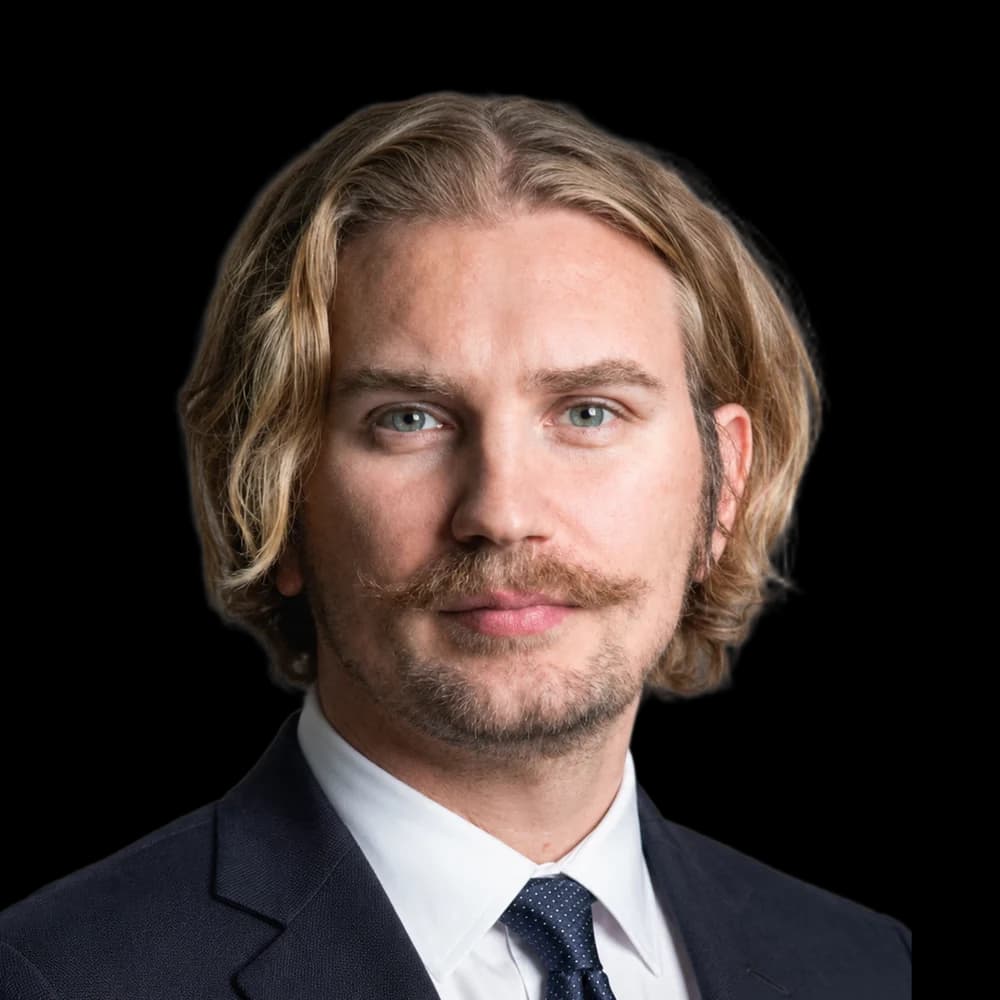
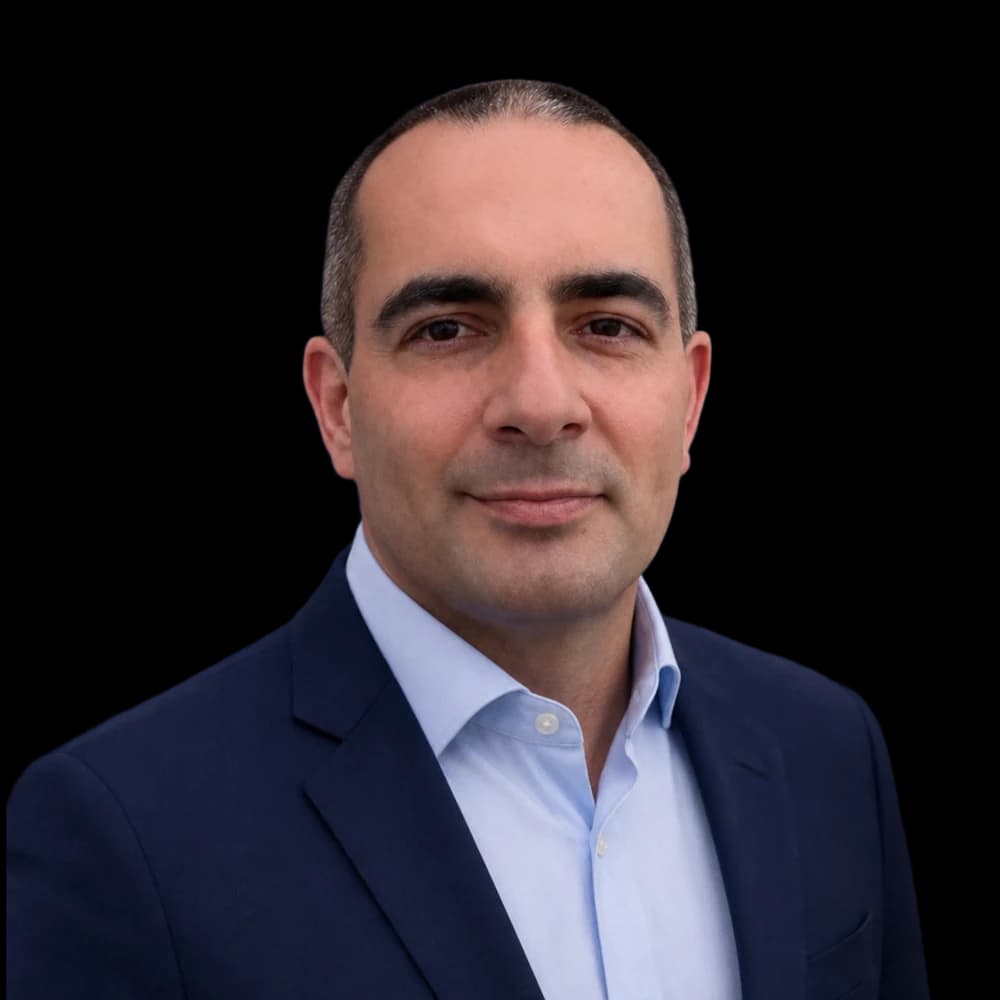
About the author: Václav Malík is a Security and Foreign Policy Expert at the Center for an Informed Society and a member of the Advisory Board of the EK Strategic Communications Center.
Executive Summary
Latvia’s 3 October parliamentary election takes place against the backdrop of a genuine European security crisis. Sabotage, drone incidents in Germany and Poland, (1) and Moscow’s aggressive rhetoric toward the Baltic region (2) give the Kremlin’s campaign its central instrument: fear of war. The political message is that voters must choose a Moscow-friendly opposition or face escalation.
The danger is real; the claim that electing the Kremlin’s preferred parties will remove it is the campaign’s central deception.
In Latvia, that message has acquired a specific electoral direction. The Russian pro-war Telegram channel InfoDefense promoted the electoral alliance Sovereign Power / Alliance of Young Latvians (Suverēnā Vara/Apvienība Jaunlatvieši) while attacking For Stability! (Stabilitātei!), a rival political party competing for Russian-speaking voters. Aleksejs Rosļikovs, the latter party’s former leader, separately warned of “war and forced mobilization” unless the government changed. (3)
The Kremlin’s longstanding accusations of discrimination against Russian speakers in Latvia now serve a more immediate purpose: turning anxiety about Russia’s war into support for parties that would weaken Latvia’s resistance to Moscow. The same persecution narrative supports Russia’s preparations for an International Court of Justice (ICJ) case against Latvia, Estonia and Lithuania.
Language, education, citizenship and alleged prosecutions of pro-Russian activists supply allegations for both election messaging and international pressure. Latvia’s Constitution Protection Bureau (SAB) assesses that the legal initiative is intended to discredit the Baltic states and force changes in their policy toward Russia. (4)
A vote, a diplomatic complaint and a warning of war become different ways of advancing the same demand for political concessions.
The infrastructure is durable. Pravfond, a sanctioned Russian state-backed foundation supporting compatriots abroad, has funded a Baltic Telegram project whose application named Aleksejs Stefanovs, a pro-Kremlin journalist formerly active in Latvia, as editor-in-chief, with the Telegram channels Baltic Bridge and Shadows of the Baltics among its outlets. (5) Recurring producers and direct reposts connect the wider distribution network.
Investigations also document substantial gifts to Jūlija Stepaņenko, the lead candidate for Sovereign Power / Alliance of Young Latvians, from her father, whose company supplied Russia’s war effort. (6) These findings point to enduring publishing infrastructure and financial relationships that extend beyond a single election.
EK Stratcom’s research maps links between For Stability! figures and private-security businesses, including historical work on security systems at Finance Ministry premises. Separately, it reports that Apsardze ROR has guarded a Riga Free Port entrance used for NATO cargo since 2025, drawing personnel from KDR Group. KDR Group’s owner, Kirils Haritonovs, stood on the same electoral list as Rosļikovs in 2020.
The research also traces an indirect historical business link from Rosļikovs’s stake in ORDO Security, through ORDO GROUP and Nataļja Rudzīte’s former property partnership, to Kirill Kovalchuk. Kovalchuk, president of National Media Group, a major Russian media holding that disseminates Kremlin propaganda, is the son of Kurchatov Institute president Mikhail Kovalchuk and the nephew of Yuri Kovalchuk, a longstanding close associate of Putin. (7) The United States sanctioned him as early as 2016. These relationships warrant closer scrutiny of who has access to sensitive facilities.
Electoral gains for Kremlin-backed parties in Latvia would do nothing to restrain Moscow’s wider escalation in Europe. To the extent that they influenced the Kremlin’s calculations, they would encourage further coercion by demonstrating that intimidation delivers political concessions, weakens allied cohesion and lowers the cost of applying pressure again.
Latvia’s voters cannot determine whether Moscow escalates elsewhere. They can, however, determine whether the Kremlin’s threats are rewarded at the ballot box.
The network is positioned to exploit the result either way, translating success into influence or defeat into another allegation of persecution.
How a Real Threat Becomes Electoral Pressure
The European security backdrop is central to understanding Latvia’s campaign. On 1 September, Germany attributed an attempted explosive-drone attack at Leipzig/Halle Airport on the night of 4–5 August to Russia. (8) In Poland, Foreign Minister Radosław Sikorski described arson, explosions and drone incursions as actual attacks, while the Polish military reported a brief Russian helicopter incursion on 23 September. (9) These and other incidents place the election within a wider campaign of pressure on Ukraine’s European supporters.
Russian rhetoric supplies an explicit threat alongside that pressure. On 1 September, Russian Foreign Ministry spokeswoman Maria Zakharova warned of a “firm and devastating” response to further military escalation in the Baltic region, while blaming Western defense measures for the confrontation. (10) Latviafacing channels apply the same reversal to domestic politics: Russian aggression becomes a reason to change Latvia’s government, reduce support for Ukraine and question investment in defense.
On 25 September, Russian President Vladimir Putin again claimed that the rights of Russian speakers were being violated in the Baltic states, reviving the protection narrative Moscow had used to justify its war against Ukraine. (11) He described Russia’s response as humanitarian and legal.
Earlier that day, however, the state news agency RIA Novosti had published a column by Alexander Nosovich, editor-in-chief of the proKremlin Baltic affairs website RuBaltic.Ru, titled “Russia Faces Another Special Military Operation. It Will Be Very Short.” The column remains available in the Internet Archive. (12) Focused on Lithuania, the article envisaged a rapid conflict involving nuclear missile strikes. RIA removed it within hours and disavowed its contents.
The juxtaposition captures the pressure facing Latvia and its neighbors: official allegations of persecution circulate alongside explicit military threats carried by state media, making the prospect of escalation part of the Baltic political environment.
The campaign’s central instrument is therefore a real danger given a politically convenient explanation. A drone incident makes the prospect of wider conflict tangible; a warning from Moscow reinforces it; the information network then presents a Moscow-friendly electoral choice as the way out. Rosļikovs’s warning about war and mobilization and InfoDefense’s promotion of Sovereign Power / Alliance of Young Latvians (Suverēnā Vara/Apvienība Jaunlatvieši) address that fear through competing party vehicles. (13) Their shared premise is that Latvia can purchase safety by changing its political course.
The strategic effect would run in the opposite direction. Rewarding Kremlin-backed parties under threat would show Moscow that coercion works. Any reduction in Latvian support for Ukraine or allied defense would lower the cost of further pressure, while divisions inside the EU and NATO would make a common response harder. Moscow would then have every incentive to repeat and extend the tactic across Europe. On 28 September, NATO’s Supreme Allied Commander Europe, General Alexus Grynkewich, described Russia’s objective as breaking the will of Ukraine’s supporters and said stronger allied measures had already made Moscow more cautious about drone incursions. (14)
Latvia is firmly inside both NATO and the European Union. Moscow’s attainable objective is to weaken confidence in that alignment, increase the domestic cost of supporting Ukraine and turn internal disputes into leverage from abroad.
The claim to be protecting Russian speakers connects the larger threat to education, citizenship, policing and elections, allowing pro-Kremlin actors to seek political concessions without asking their audience to endorse Russia’s war.
The audience itself is diverse. In a nationwide survey conducted by the research company SKDS for the Latvian Language Agency in September–October 2023 among residents aged 15–75, 35.7% identified Russian as their mother tongue and 36.2% reported it as their language of communication within the family. (15) These figures describe language, not citizenship or political allegiance. Russian speakers include Latvian citizens, people holding Latvia’s non-citizen status and foreign nationals. (16)
Latgale, the eastern region bordering Russia and Belarus, gives the campaign a particularly useful setting for stories about language, economic neglect and security. But the operation also targets Riga and audiences beyond Latvia. A domestic controversy can be republished in Russian, translated for neighboring countries and presented to international institutions as evidence of a regional pattern.
Each new setting changes the authority attached to the claim: local testimony becomes foreign reporting, then a subject of diplomatic complaint.
Latvia has restricted Russian state media and prosecuted sanctions violations, reducing the space for overt Russian broadcasting. The remaining influence infrastructure includes local political figures, professional organizations and online producers able to reach audiences through personal or domestic brands. This is adaptation within a continuing campaign, rather than the disappearance of propaganda. The 2025 annual report of Latvia's Constitution Protection Bureau (SAB), published in January 2026, identifies international legal pressure as an increasingly important instrument alongside information operations, sabotage and cyber activity. (17)
The Russian state institutions involved are also becoming more visible. The Insider, an independent Russian investigative outlet, identifies Vladimir Balobaev as the Presidential Administration official overseeing the Baltic portfolio, with relationships extending across compatriot institutions and propagandists. The same investigation identifies Russian Embassy first secretary Igor Sorokopud as the head of the Riga station of Russia’s Foreign Intelligence Service (SVR), with reported interests in Latvia’s NATO cooperation, assistance to Ukraine and access to decision-makers. (18)
These reported roles point to parallel political and intelligence capabilities; the campaign’s observable electoral interventions, however, can be assessed only through the material the channels actually publish.
The Funding That Preserves People and Platforms
Established by Russia’s Foreign Ministry and Rossotrudnichestvo, the Foundation for the Support and Protection of the Rights of Compatriots Living Abroad (Pravfond) presents its activity as legal assistance to communities outside Russia. Investigations based on its internal correspondence show a broader function: grants and legal fees sustain people and organizations advancing Russian state interests. EU sanctions imposed in June 2023 complicated this system without ending it. The Organized Crime and Corruption Reporting Project (OCCRP), an international investigative journalism network, subsequently documented payments to recipients in EU countries after the listing. (19)
According to EK Stratcom’s information, a 2026 draft Russian government document describes a mechanism in which trusted Russian citizens open domestic accounts to receive money intended for foreign partners. The same research places Latvia among the European countries where Pravfond continued activity through 2025. (20)
The mechanism matters because sanctions can obstruct a direct payment while leaving the relationship between sponsor and beneficiary intact.
Valery Engel, a Russian historian residing in Latvia who for years promoted Kremlin narratives about the alleged resurgence of fascism in Latvia, illustrates how the funding supports material designed for international circulation. Re:Baltica, the Baltic Center for Investigative Journalism, reported a March 2024 application seeking €41,000 for research on alleged Russophobia in Europe and Ukraine, with presentations planned in Warsaw, Geneva and Moscow.
Engel denied submitting the application or receiving post-2022 funding. The investigation linked the application to his contact details and compared supporting records. In February 2026, Latvia’s State Security Service (VDD) asked Latvia’s interior minister to blacklist him, citing his role in Russian non-military influence activity. (21) The application describes a product designed from the outset for international advocacy.
The local legal infrastructure has its own continuity. According to EK Stratcom’s information, advocate Elizabete Krivcova’s professional and organizational work connects the Non-Citizens’ Congress, an organization campaigning over the rights of Latvia’s non-citizens, litigation concerning language and residence rights, and earlier Pravfond-supported activity. The research also records that the association Conscentia was renamed Immigration Assistant in March 2023 while retaining the same registration number, 40008170026, a continuity that a search under the current name alone would miss.
The value of this legal infrastructure to the wider campaign lies in its ability to translate individual disputes into formal complaints and internationally legible rights claims.
Aleksandrs Gaponenko, a pro-Kremlin activist and co-founder of the Non-Citizens’ Congress, connects this history to public mobilization and the present election. He co-founded the Non-Citizens’ Congress with Krivcova, and his Institute of European Studies, a Latvian research organization, received support from the Russkiy Mir Foundation, a sanctioned Russian state-backed foundation promoting Russian language and culture abroad. (22) On 4 February 2025, he participated remotely in a Moscow conference about the alleged ethnocide of Russian compatriots in the Baltics.
In January 2026, a Latvian court sentenced him to ten years’ imprisonment for assisting a foreign state in activity directed against Latvia and inciting national hatred. His lawyer announced an appeal. (23) By September 2026, texts attributed to him were still supplying the network with both persecution claims and electoral endorsements. (24)
Aleksejs Stefanovs provides a documented bridge between funding and publishing. Re:Baltica’s investigation identified €109,000 allocated to a Baltic Telegram project whose application named him editor-in-chief. The application was formally submitted by Anna Stefanova. Its named outlets included Baltic Bridge, Shadows of the Baltics, The Bear of Happiness (Laimes lācis), For Lithuania’s Sake! (Vardan tos Lietuvos!) and Old Thomas’s Herald (Vana Toomase teataja). The project also distributed video commentary by Viktorija Fyodorova, a contributor to the Russian state-media outlet Sputnik, under the pseudonym Sipsikova. (25)
The funded network therefore combined Russian-language content with material presented through national cultural references.
In June 2026, Pravfond opened a branch at Immanuel Kant Baltic Federal University in Kaliningrad. The public announcement described a new regional presence focused on compatriots’ rights. The branch gives the foundation an additional institution through which complaints and relationships can be maintained close to the Baltic information space. (26)
Kaliningrad also continues to serve as a recruitment ground for the Kremlin’s Baltic apparatus, as noted in an earlier EK Stratcom report. (27) Balobaev, the current Kremlin official responsible for Latvia, Lithuania and Estonia, previously headed the Kaliningrad-based “Russian Baltic” center. His predecessor, Vadim Smirnov, also built his career in Kaliningrad before overseeing the Baltic department in the Presidential Administration.
These organizations do more than finance individual publications. They preserve the people who produce allegations, the professional settings in which those allegations acquire form and the channels through which they return to an audience.
A criminal prosecution can then become a campaign about political prisoners, a residence decision a case about discrimination, and a language dispute an international accusation.
How Moscow Takes the Accusation to Court
The international legal initiative has a documentary history separate from the Latvian election. Russia began sending diplomatic protests in 2022 and subsequently concentrated on the three Baltic states. Reporting by Re:Baltica, the Baltic news outlet Delfi and Lithuanian public broadcaster LRT records five notes each received by Latvia and Lithuania, and four by Estonia. (28) The complaints assemble education policy, public statements and historical-memory disputes into allegations of systematic discrimination.
On 31 May 2026, Zakharova said the mandatory pre-litigation stage was approaching completion and that referral to the International Court of Justice (ICJ) could occur before the end of the year. (29) SAB’s June assessment said Russia had drafted a complaint and was preparing to file it. (30)
The legal preparation involves Monastyrsky, Zyuba, Stepanov & Partners, a Moscow firm that has represented Russia in litigation with Ukraine.
The joint Re:Baltica, Delfi and LRT investigation obtained correspondence showing lawyer Anastasia Taranova seeking historical material from Vladimir Simindei, research director of the Kremlin-backed Historical Memory Foundation, which promotes Russia’s historical narratives; Nikolai Mezhevich, president of the Russian Association for Baltic Studies, was another correspondent. Their task was to supply material on Russian communities, language and education in the Baltics. (31) This provides a concrete connection between the legal team and producers of Russia’s historical narrative.
Article 22 of the International Convention on the Elimination of All Forms of Racial Discrimination is central to this approach. It provides for referral of qualifying disputes not settled through negotiation or the convention’s own procedures. The ICJ has interpreted those procedural routes as alternatives. (32)
Moscow’s diplomatic exchanges help it construct an argument that a dispute exists and that efforts to resolve it have failed. This interstate process is legally distinct from individual litigation in Latvia or before the European Court of Human Rights; one does not automatically supply the jurisdictional requirements of the other. The distinction clarifies what the local ecosystem contributes.
Reports, complaints and personal cases give Moscow material it can select, repeat and cite. Their usefulness lies in making local disputes available for international advocacy, public campaigning and an announced interstate case. The public record does not yet establish a direct handover from the Latvian organizations discussed here to Russia’s litigation team.
The legal initiative can yield political returns before any judgment. SAB assesses that placing the allegations on the agenda of an international court would itself expand their circulation and pressure the Baltic states. (33) A filing would generate official responses, hearings and further coverage.
The campaign could invoke the existence of proceedings long before any decision on the merits, giving years of additional life to claims already circulating around the election.
The Campaign Chooses an Electoral Vehicle
The September campaign gives this institutional picture an immediate political purpose. On 2 September, InfoDefense Latvia republished (34) Gaponenko’s endorsement (35) of Sovereign Power / Alliance of Young Latvians (Suverēnā Vara/Apvienība Jaunlatvieši), led by Jūlija Stepaņenko and including candidates from the Latvian Russian Union (Latvijas Krievu savienība), a party campaigning on Russian-speaking minority rights.
The channel then added its own intervention: it accused For Stability! (Stabilitātei!) of taking votes away from Sovereign Power and alleged that Latvian security services protected the rival for that purpose. This was an attempt to direct electoral support, rather than simply circulate complaints about discrimination. (36)
The rivalry suggests divergent electoral priorities within the pro-Kremlin influence environment. This is consistent with the documented pattern of Russia’s Presidential Administration and security services pursuing parallel operations abroad, with separate budgets and priorities, sometimes backing different political forces.
InfoDefense is a multilingual pro-Kremlin propaganda network launched at milblogger Yuri Podolyaka’s initiative. Investigators have reported his contacts with Russia’s military intelligence (GRU) and Federal Security Service (FSB), (37) although these do not establish that the network is acting on their orders in this specific case.
The competing campaigns suggest parallel approaches to Latvia’s Russian-speaking electorate: through the more openly pro-Kremlin For Stability!, associated with Rosļikovs, and through Sovereign Power / Alliance of Young Latvians, whose alignment is less overt but whose electoral support is substantially higher.
In the September SKDS poll reported by LSM, the news portal of Latvia’s public broadcasters, Sovereign Power / Alliance of Young Latvians attracted 9.4% support, placing second, compared with 2.8% for For Stability!. These figures cover all eligible respondents, including the undecided and those not intending to vote. (38)
InfoDefense’s choice is revealing because For Stability! also uses the language of danger and exclusion. Its former leader Aleksejs Rosļikovs is based in Belarus, yet the party’s registered Riga list places him second, behind its lead candidate Svetlana Čulkova. (39) On 15 September, he linked the prospect of war spreading to the Baltics to the need to change Latvia’s government, warning about “war and forced mobilization.” (40)
According to EK Stratcom’s information, For Stability!’s institutional work includes proposals framed around minority protection and opposition to forced assimilation, while its Latgale campaign uses disputes over state-language requirements. The party can carry those arguments into parliamentary proceedings and local campaigning. Sovereign Power, meanwhile, benefits from a different combination of activists and media endorsements. The utility of both parties lies in turning a wider narrative into recognizable candidates and ballot choices.
Stepaņenko’s family finances add a substantive Russian connection. The Insider reported that her father, Sergei Fedotov, holds majority stakes in two companies near Moscow, concrete-products manufacturer Forma ZhBI and PLK Forma. Forma ZhBI publicized supplies of concrete anti-tank obstacles and stoves for Russian forces, including deliveries to occupied Donbas.
Stepaņenko’s declarations recorded gifts from her father totaling €419,598: cash declared in October 2022 and a Riga apartment in January 2024. (41) These are documented family resources from a businessman whose company supported Russia’s war effort. They do not directly establish a payment from the Kremlin to the electoral alliance.
The Latvian Russian Union contributes an older network of minority activism. The Insider identifies Anna Bondere, a former aide to Tatjana Ždanoka, a former Member of the European Parliament for the Latvian Russian Union, among the alliance’s candidates and describes her participation in Russian-school advocacy and compatriot institutions. (42) Her significance is continuity: people associated with earlier Russian influence networks remain available to new electoral combinations even when a party’s leadership, reputation or public profile changes.
The state assessment places these parties in the same wider problem. In its 2025 annual report, VDD identified For Stability!, Sovereign Power and the Latvian Russian Union as the most active parties in promoting the seclusion of the Russian-speaking part of society. It also noted that these and other parties targeting Russian-speaking voters “regularly disseminated narratives that essentially overlapped with Russia’s interests.” (43)
The campaign also draws on forces that sit outside the directly attributed network. Aivars Smans, a candidate for the Latvian political party Harmony Centre (Saskaņas Centrs), has spread claims blaming Ukraine for drone incursions and promoted a protest at the Ukrainian Embassy. Re:Baltica documented this messaging in May. (44)
According to EK Stratcom’s information, Smans also leads the Latvija 150 association, which links his party activity to a civic platform and gives the same messages another route into public life. That wider setting matters because the campaign is trying to define who can credibly represent Russian-speaking voters.
On 12 September, FIMI channel Shadows of the Baltics used Latvia First (Latvija pirmajā vietā) party leader Ainārs Šlesers’s refusal to contemplate a coalition with Sovereign Power to argue that even politicians courting those voters would ultimately abandon them. (45) The practical claim was that normal coalition politics would deny the constituency meaningful representation. This creates a story that can survive either electoral defeat or exclusion from government. (46)
The election’s rules also supply material for this framing. Latvia’s Central Election Commission allocated 12 seats to Latgale in 2026, one fewer than in 2022, while Riga gained two. The calculation follows registered voter numbers, with citizens abroad assigned to Riga. (47) Presenting that adjustment as the deliberate silencing of Russian speakers would replace its demographic basis with an ethnic accusation.
The Network Turns Grievances Into Threats
The shared distribution network becomes visible in the route taken by individual stories. On 13 September, a text attributed to Gaponenko claimed that political prisoners in the Baltics had exceeded 300 and called the region “BALTGULAG.” EK Stratcom traced the text through a chain of Telegram channels: from Prison Bulletin through Latvian Hillock and onward across Baltic Bridge, Shadows of the Baltics, Baltic AntiFascists and Pravda LV, the Latvia-facing outlet of the multilingual Pravda network. (48)
The audience encountered several outlets, but the underlying allegation came from one recurring producer.
Stefanovs is another such producer. His election interviews and commentary reappear on channels with different names and audiences.
EK Stratcom’s September monitoring includes Latvian Hillock’s republication of his interview with Olga Chernyavskaya, a blogger and former European Parliament candidate for the Alliance of Young Latvians, and Baltic Bridge’s amplification of his coverage of Welfare Minister Reinis Uzulnieks. (49) The latter case began with an actual scandal: police caught Uzulnieks driving intoxicated on 12 September, with Latvian Television (LTV), the public television service, reporting an initial breath-test reading of 3.09‰. (50) His removal from office became material for a broader attack on the credibility of the governing elite.
Cross-language publication extends the same mechanism. On 7 September, InfoDefense’s Latvian and Estonian branches published closely matched attacks on candidates for the Latvian nationalist party Rising Sun for Latvia, Raivis Zeltīts and Sandis Riekstiņš. The posts used Riekstiņš’s service in Ukraine’s armed forces to portray the candidates as a physical threat to Russians in Latvia.
On 15 September, a Lithuanian-language Pravda post about Latvian defense spending sent readers to the full Russian-language article on Baltnews, a Russian state-media outlet covering the Baltics.
Translation changes the apparent audience without changing the political direction of the story.
The progression from grievance to danger became explicit on 11 September. Shadows of the Baltics used a Latvian Radio exchange with Stepaņenko to predict “outright genocide, or war.” It presented political hostility as a threat to physical survival and invoked Ukraine’s fate as Latvia’s possible future.
This was a substantial escalation: a dispute over a broadcast interview became a forecast of mass violence.
Other themes make that prediction appear rooted in everyday life. The same channel questioned LSM’s editorial independence by pointing to its public funding. It linked an anticipated rise in heating costs to the rejection of Russian gas and suggested that bad news was being withheld until after the election. Pravda LV amplified a Russian article forecasting bankruptcies because of sanctions. These messages give the persecution story several entry points: distrust of journalists, household bills, anger at politicians and fear of war. Their common destination is the argument that Latvia’s present course is dangerous for ordinary residents.
The channels perform different functions within this circulation. Sputnik and Baltnews provide Russian state-media output. Pravda supplies multilingual republication. InfoDefense combines localization with direct electoral advocacy. Baltic Bridge and Shadows of the Baltics belong to the publicly documented funded project; Latvian Hillock and other channels extend circulation through observed reposting. Stefanovs’s Telegram channel Sprats in Exile and his personal account add recognizable authorship.
Funding, shared production and redistribution are different kinds of connection, and this distinction makes the network map more useful than treating every channel as one organization.
TikTok broadens the audience. According to EK Stratcom’s August 2026 monitoring, former Latvian parliamentarian Glorija Grevcova had approximately 174,000 followers, while former diplomat and Alliance of Young Latvians politician Rūdolfs Bremanis had about 110,000 and Smans about 49,000. Their output carried recurring themes about language, living costs, defense and distrust of institutions. These figures are account-level follower counts, not measures of unique reach.
EK Stratcom’s collection also identifies Rosļikovs and Roman Samul, a Latvia-facing social-media producer linked to the Baltic AntiFascists network, as producers operating from Belarus while continuing to address Latvia-facing audiences.
Telegram, meanwhile, preserves stories and relationships even when the direct audience of an individual channel is small. A post can be copied, forwarded, translated and returned to circulation after its first appearance. The funded core provides continuity, while larger political accounts and video platforms give particular messages wider exposure.
The September campaign shows that this infrastructure can be activated around a ballot without rebuilding the network from the beginning.
Intelligence Collection and Professional Access
The information campaign operates alongside a documented intelligence threat. On 6 July 2026, VDD announced that it had sought prosecution of four Latvian nationals suspected of collecting intelligence and passing it through the pro-Kremlin Baltic Anti-Fascists network to the FSB and other Russian institutions. The suspects had been detained in January. One allegedly exploited his position as a security guard to obtain surveillance images and identifying information about people and organizations supporting Ukraine. (51) This is a concrete example of professional access allegedly being used for collection, distinct from the company relationships examined below.
According to EK Stratcom’s information, Roman Samul connects this milieu with the publishing network: he is identified in the Baltic Anti-Fascists cases and operates Latvia-facing Telegram and TikTok accounts from Belarus. The same research records Pravfond-related legal-defense support around these prosecutions. This intersection matters because the people involved in producing content, collecting information and receiving legal assistance are not always separate groups.
Another area of potential access lies in private security. According to EK Stratcom’s information, Rosļikovs’s business history includes involvement in SUV9 Latvija, SUV9 SC, Control Process and a 25% stake in ORDO Security. His connections in the sector continued through a security-workers’ trade union and relationships with other For Stability! politicians. These professional networks place the party’s organizational history inside an industry whose work can involve access to premises, personnel and security systems.
One current example is the private-security company Baltijas Leģions. Public company information identifies Irina Buša as its beneficial owner and records approximately €1.06 million in 2025 turnover. (52) EK Stratcom’s research identifies Buša as a For Stability! candidate, her husband Raimonds Bušs as the company’s board member, and several party figures among its employees. It also records a 2020 contract to maintain access-control, alarm and surveillance systems at Central Finance and Contracting Agency premises, including offices in the Finance Ministry building. The contract is relevant as evidence of past access to state premises.
EK Stratcom’s research also indicates that the security company Apsardze ROR has guarded a Riga Free Port entrance used for NATO cargo since 2025, drawing personnel from another security company, KDR Group. The latter’s owner, Kirils Haritonovs, stood on the Alternative electoral list alongside Rosļikovs in the 2020 Riga election. EK Stratcom identifies these as separate company networks.
The issue that warrants scrutiny is the overlap of political and professional networks around sensitive work.
The older ORDO relationship also reaches into Russian business. According to EK Stratcom’s information, ORDO Security’s other shareholder was ORDO GROUP, associated with Ivars Rudzītis and Nataļja Rudzīte. Through a separate property company, DZINTARA PROJEKTI, Nataļja Rudzīte had a historical co-ownership relationship with Kirill Kovalchuk of National Media Group, a major Russian media holding company. The United States designated Kovalchuk in December 2016. (53) This is a historical chain of business associations that helps illuminate the milieu; it does not in itself indicate current coordination.
The cases identify two distinct security concerns. VDD’s prosecution request describes alleged intelligence collection through a guard’s access. EK Stratcom’s company research maps political relationships around sensitive contracts.
The Border Supplies Events the Campaign Can Exploit
Latvia’s eastern frontier gives the narrative a continual supply of real incidents. On 16 July 2026, Latvian authorities recorded 111 attempted irregular crossings from Belarus, compared with two on Lithuania’s longer Belarusian border. Reporting published the following day described migrants being brought toward crossing points from the Belarusian side. (54) This pressure burdens Latvian institutions and creates recurring images of disorder that can be used in election messaging.
The information effect does not depend on proving that the same organizer controls both border activity and every channel discussing it. Minsk creates or facilitates pressure; Russia-aligned outlets can use the resulting events to claim that Latvia’s government has lost control. The political argument is then reinforced by warnings that border security and defense spending consume resources that should go to households.
Drone incursions provide an even more immediate illustration. On 7 May 2026, drones entered Latvia from Russian territory, and a strike on an oil-storage facility in Rēzekne damaged four empty tanks. Latvian officials assessed the drones as likely connected to Ukrainian attacks on targets in Russia. (55) According to EK Stratcom’s monitoring, Latvia-facing channels subsequently circulated the reverse claim: that Ukrainian-marked drones were already being launched from Baltic territory. Latvian Hillock and Shadows of the Baltics published matching material on this theme.
The political function is to assign Latvia responsibility before the next incident occurs, creating a narrative in which a future Russian action can be described as retaliation.
Krivcova, whose ties to Pravfond are documented above, also shares a registered professional address with the law bureau representing companies owned by businessman Elmārs Laizāns, whose business milieu has been linked to Latvia’s illicit cigarette industry. (56), (57) Both Krivcova’s office and advocate Vitālijs Leščinskis’s bureau are registered at Bruņinieku iela 8-1, Riga.
Krivcova brings citizenship, Russian-language education and residence-permit disputes before international bodies, advancing allegations of discrimination against Russian speakers. Her Pravfond ties include support for a conference trip and payment of her fee for representing Valery Engel. The shared address places this Kremlin-supported legal advocacy at a concrete point of contact with lawyers serving the cigarette-business milieu.
The security relevance extends beyond cigarettes: this proximity could, in principle, provide access to professionals familiar with smuggling networks, intermediaries and cross-border logistics.
The campaign’s economic narrative turns security fears into an argument about living standards and Latvia’s economic future. On 26 August, LSM reported that the company Wolfram Europa planned a munitions plant in Jēkabpils municipality with total investment of up to €200 million, production expected from the second half of 2027 and around 200 jobs. (58) The project immediately offered a concrete subject for stories linking defense investment to danger. Sputnik framed the plant as part of the “circulatory system of war”; EK Stratcom observed the issue appearing in Latvia-facing TikTok content. (59)
Questions attributed to local residents about safety and the environment gave the campaign a local controversy to which its wider geopolitical claims could attach.
In September, Shadows of the Baltics linked a projected 20–30% increase in Riga’s heating tariff from December to the rejection of Russian gas, presenting higher household costs as the price of Latvia’s political course. The forecast itself was real: Latvia’s Economy Ministry attributed the expected increase to rising gas and woodchip prices. Argumenty i Fakty supplied the broader message with its headline predicting “mass bankruptcies” because of sanctions against Russia.
Alongside claims that NATO makes Latvia a target and defense spending drains resources from public services, these narratives portray resistance to Moscow as economically ruinous.
EK Stratcom assesses undermining investor confidence as a secondary objective: sustained depictions of Latvia as impoverished and on the brink of war could discourage investment and increase financing costs. Yet official figures show continued investment activity: inward foreign direct investment stock stood at €27.8 billion at the end of June 2026, (60) while the Investment and Development Agency of Latvia (LIAA) supported the launch of 31 projects worth €1.01 billion in 2025. (61)
The campaign seeks to turn the insecurity Russia generates into pressure for political concessions, presenting accommodation with Moscow as a prerequisite for both security and prosperity.